 Seattle Streets Alliance
Back to School: Helping Seattle Kids Walk, Bike, and Roll Safely
- JoshHolland
- Aug. 25, 2026
It’s back-to-school season! As students across Seattle head back to classrooms, we have a question for the families in your life: How are the kids getting to school?
About 30% of Seattle Public Schools K–8 students already walk, bike, or scooter to school (Seattle Public Schools). Walking and biking can give kids physical activity, time with friends, and an opportunity to build confidence and independence in their neighborhoods.
But whether a family feels comfortable letting their child walk or bike often depends on the streets between home and school.
At Seattle Streets Alliance, we believe every child should have a safe and comfortable way to get to school. As another school year begins, here are some of the ways Seattle is working toward that goal — and how families can get involved.
School Streets are growing
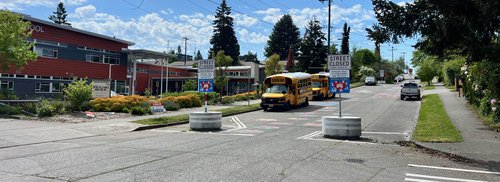
Have you ever seen a block next to a school closed to through-traffic?
That’s a School Street.
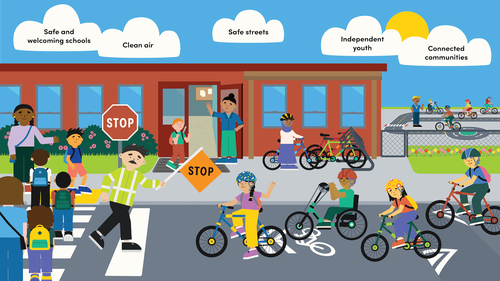
School Streets keep the block open to people walking and biking, school buses, residents, students with mobility needs, deliveries, and emergency vehicles while closing it to through-traffic — including school drop-off and pickup. By dispersing car traffic rather than concentrating it directly outside the school, they can create cleaner air, more comfortable crossings, and a more welcoming environment for kids arriving on foot or by bike.
Seattle introduced School Streets in 2021, and most participating schools chose to continue them after returning to normal schedules. Today, Seattle has 21 School Streets, including five that have been made permanent.
And that number will soon grow substantially.
As part of Mayor Katie Wilson’s new push to accelerate Seattle’s Vision Zero work, the City has set a goal of bringing School Streets to 40% of eligible schools.
That means many more Seattle kids will soon have a calmer and more welcoming space waiting for them when they arrive at school.
Want a School Street at your school?
Families can help make it happen.
Parents and PTAs can work with their school principal to request a School Street. The block must be adjacent to the school, be a non-arterial street, and not carry a public bus route. SDOT also considers impacts to businesses and emergency response.
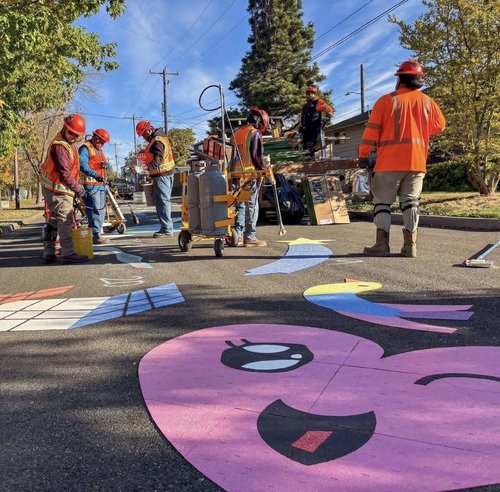
And unlike many street projects, this doesn't necessarily take years: SDOT says an approved temporary School Street can be installed within a few weeks.
Learn about School Streets and how to apply
Start a Walking School Bus 🚶
Safer infrastructure is important, but families can also work together to make the trip to school easier and more fun.
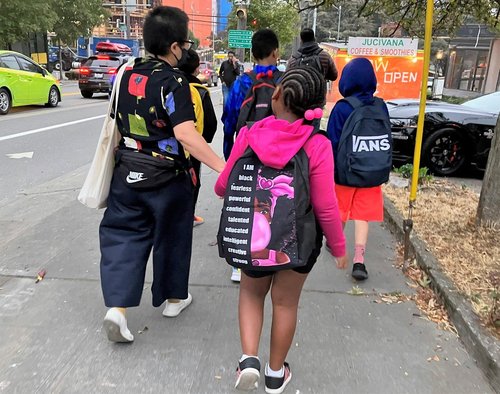
A walking school bus is just what it sounds like: a group of kids walking to school together with one or more adults or older students, picking up students along the way.
It can be as simple as two families taking turns walking their kids to school or as organized as a neighborhood route with designated stops, a timetable, and a rotating group of volunteers.
Think of it as a carpool — without the car.
Getting started can be simple:
- Find a few families. Invite neighbors who might want to walk together.
- Choose and test a route. Look for sidewalks, comfortable crossings, good visibility, and lower-traffic streets where possible.
- Pick a schedule. Every morning, once a week — whatever works for your group.
- Choose meeting points. Kids can join at their homes or designated stops along the route.
- Share the responsibility. Rotate adults so one parent isn't responsible for every trip.
- Make it fun! Give your walking school bus a name, have theme days, or celebrate milestones together.
You don't have to start big. A few families walking together is a walking school bus, and your group can grow from there.
Seattle Public Schools also provides route maps and resources to help families organize walking school buses.
Or Start a Bike Train 🚲
Prefer two wheels? Try a bike train.
The idea is similar to a walking school bus: a group of kids bikes to school together along a planned route, accompanied by adults or older students.
Find interested families, test your route, establish meeting points, and identify adults who are comfortable riding on the street and can rotate leading the group.
Walking school buses and bike trains aren't just about transportation. They're an opportunity for physical activity, friendship and community — and they help kids develop the skills and confidence to get around their neighborhoods.
Building confident walkers and bikers
Seattle Public Schools also treats walking and biking as skills kids can learn.
Pedestrian-safety lessons teach children how to use sidewalks, navigate intersections, recognize things that might block their view of traffic, understand pedestrian signals, and look and listen before crossing. The curriculum emphasizes reinforcing those lessons through hands-on practice.
A walking school bus or bike train gives kids another opportunity to practice those skills with adults and friends on the streets they actually use.
But kids can't do it alone.
We can teach children how to navigate traffic safely while also designing streets that recognize that kids are still learning. Seattle's Safe Routes to School program takes that broader approach, combining education and encouragement with street design and infrastructure intended to make walking and biking safer and easier.
Practice at a Traffic Garden
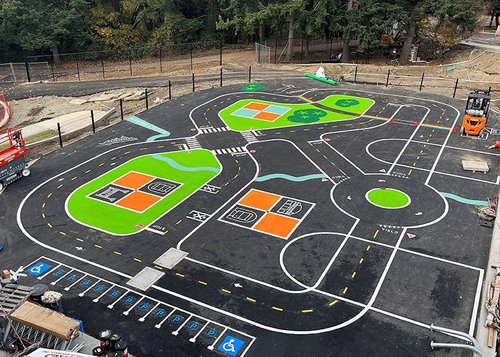
Another place to build those skills is a Traffic Garden.
Seattle Public Schools has been adding these car-free spaces to school campuses, giving young people a place to practice walking, biking, scooting, navigating intersections, and other street-safety skills without moving cars around them.
Schools can use Traffic Gardens during physical education, and where campuses are open, families and neighbors can use them outside class too. Consider visiting one for a playdate, bike rodeo, or just some practice before your child starts biking to school.
Help kids cross the street safely
Want to take an even more direct role in creating safer trips to school?
Seattle Public Schools is hiring school crossing guards. Crossing guards help kids and families navigate streets during school arrival and dismissal while becoming a familiar face in their school community.
Positions are part-time during arrival and dismissal and currently pay $21.30 an hour.
Learn more about SPS transportation jobs
A safe trip to school for every kid
There's no single solution for getting kids to school safely.
We need to teach kids the skills to navigate their neighborhoods. We need families and communities that make walking and biking welcoming and fun. And we need streets designed for safety, so a child doesn't need perfect judgment every moment simply to get to class.
School Streets, walking school buses, bike trains, Traffic Gardens, crossing guards, and safer infrastructure can all help.
As kids head back to class this fall, it's a great time to try walking, biking, or rolling to school.
Do you already have a School Street, walking school bus, or bike train at your school? We'd love to hear how it's going!
Share your story and photos with us — and help inspire another school community to get started.